Cut through the mall on a weekday afternoon this month and take the hallway that used to smell like chile-rubbed sirloin and fresh tortillas. The storefront near what used to be Canyon Café is dark. No sign taped to the glass, no notice on the directory kiosk, just the kind of quiet that makes a longtime shopper stop and double-check they're in the right spot. Canyon Café closed for good on January 25, capping a run that started in November 1995. In the weeks after it shut, no one, not the property owner, not the trade press that tracks these things, said what would fill the space next. Nothing has surfaced publicly since.
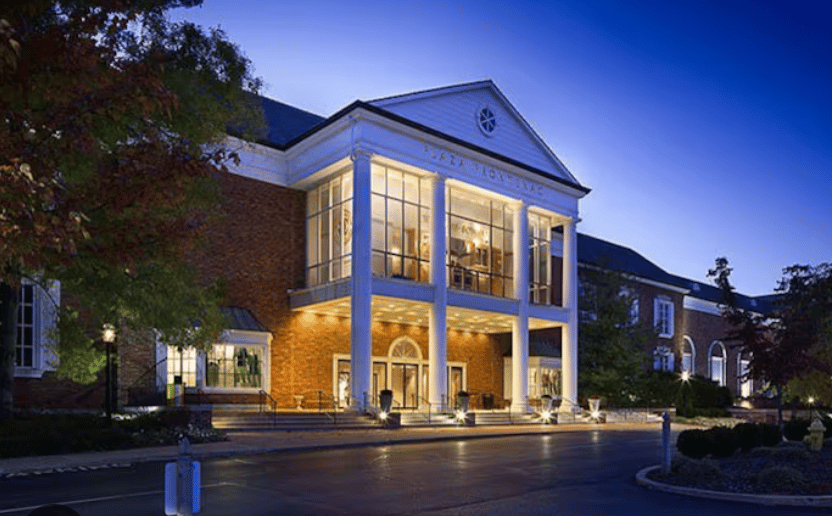
That's not really the story, though. St. Louis has absorbed sharper restaurant losses than one Tex-Mex cantina and moved on without much notice. The actual shift is what the closing exposed. For the first time since Plaza Frontenac opened in 1974, the building's interior concourse, the part under the skylights where a shopper could once spend a whole afternoon without stepping back outside, doesn't have a single freestanding restaurant of its own.
Thirty Years Behind the Same Counter
Canyon Café wasn't a footnote tenant. It ran continuously inside the mall from 1995 until this year, long enough to become the kind of place regulars didn't think to look up before going, because it was simply always there. The Cadillac Margarita came with an unofficial two-drink limit the staff enforced with a straight face. The Poblano Chicken Chowder did something rarer: it won so many first-place Golden Ladles at Manor Grove's long-running Soup's On! competition that organizers eventually asked the café to bring a second entry so other soups had a chance. They brought a posole. The chowder came back the next year anyway and won again.
When the closure notice went up, it came from the restaurant's own general manager, Francisco Bravo, in a short, plain statement: the café would be closing for business that Sunday. No press tour, no farewell weekend. Employees reportedly learned only days before customers did.
What Actually Closed With It
Once Canyon Café's doors shut, the only restaurant left inside the mall's own walls became The Zodiac Room, tucked inside Neiman Marcus. That's a meaningful distinction, not a technicality. The Zodiac Room sits inside a department store's own retail floor, past the cosmetics counters and designer racks, in a space built for Neiman Marcus shoppers rather than for anyone cutting through the concourse on a whim. It has never operated as a walk-up option the way Canyon Café did, sitting right on the public hallway with its own entrance, visible to anyone passing between Gucci and the fountain court.
Beyond The Zodiac Room, most of the other places people still eat around Plaza Frontenac sit on the outparcels, meaning you leave the building entirely to get there. Bissinger's is the exception among the stops listed here:
- Fleming's Prime Steakhouse & Wine Bar, full-service dinner, the kind of stop that assumes you planned to come
- BRIO Italian Grille, marble and warm lighting, a wraparound patio that's stayed popular for years
- BrickTops, the New Orleans-leaning brasserie on its own lot
- Flower Child, the fast-casual healthy-bowl concept from Fox Restaurant Concepts that took over the old Saint Louis Bread Co. spot at 10336 Clayton Road
- Bissinger's Handcrafted Chocolatier, the family-run chocolate boutique on the mall's second level near Entrance 5, still the easiest true walk-in stop left inside the building itself
Flower Child is worth pausing on, because it's the one genuine counter-service option in the mix, and it's the reason the plaza's dining story isn't simply "everything got more formal." When the chain announced its first Missouri location, St. Louis Magazine reported the company's reasoning this way:
"Frontenac has been on our radar for quite some time due to its central location within St. Louis County, easy accessibility, and lively community."
That's a real fast-casual option, quick in, quick out, no reservation required. It's just no longer inside the building. You have to walk out to Clayton Road to get to it.
Why the Distinction Actually Matters
None of this would carry much weight on its own. Restaurants close, tenants change, malls adjust. What makes this moment different is that it's landing at the same time Plaza Frontenac introduced paid parking on part of its lot, about 120 of the roughly 2,500 spaces, at a $2-per-hour base rate paid by phone. That's a small percentage of total parking, but it's not nothing, and it changes the math on a spontaneous visit. A shopper who used to duck in for twenty minutes, browse a storefront, and grab a bowl of chowder on the way out now has to think about where they're parking before they think about lunch.
Put the two facts together and the picture sharpens. The one restaurant that let you stay inside the building, eat without a plan, and leave whenever you felt like it is gone. Most of what's left, aside from Flower Child's counter service and Bissinger's quick walk-in stop, asks you to arrive with more intention: a reservation at Fleming's, a seat on BRIO's patio, a trip out to Neiman Marcus's own dining room. Plaza Frontenac was built in 1974 specifically as a place designed around wooden floors, fountains, and staircases meant to keep people inside for hours at a stretch. That original logic is quietly running in reverse.
So Where Does That Leave Anyone Actually Going This Month
If you're headed to the plaza for an afternoon and want something quick without leaving the building, Bissinger's on the second level is genuinely the fastest stop left inside. If you've got more time, Flower Child is a short walk across the lot and still counter-service simple. Dinner plans mean picking one of the outparcel restaurants and treating it like the destination it now effectively is, not an afterthought to a shopping trip.
The empty storefront near where Canyon Café used to be is still empty as far as anyone's reported. Whatever eventually fills it will say something about whether Plaza Frontenac wants that walk-in option back or has decided its future runs through reservations and outparcels instead. Worth watching, if you're the kind of person who notices these things about the place you actually live near.
Frontenac's day-to-day rhythms, the mall, the corridor along Clayton Road, the older neighborhoods tucked behind it, are the kind of detail that only comes from paying attention over time, not from a single visit. If you're weighing a move into this part of St. Louis, or already here and curious what else has shifted nearby, Alison Sheehan keeps track of exactly this kind of local texture alongside the market fundamentals. Let's Connect.